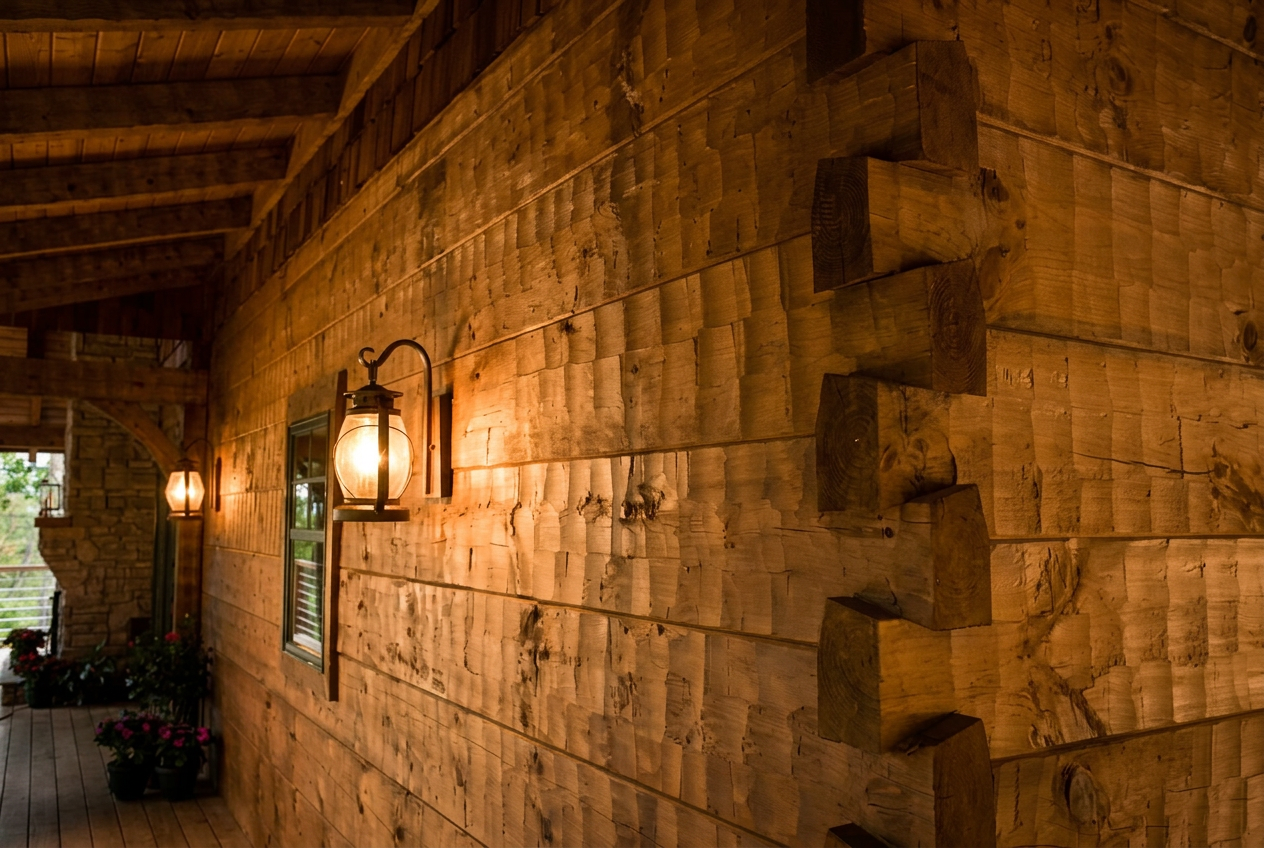
Log on Log
D-log and square-log profiles stacked tight — the American classic.
Stacked Traditional is the profile most people grew up drawing when they drew a cabin. Milled logs
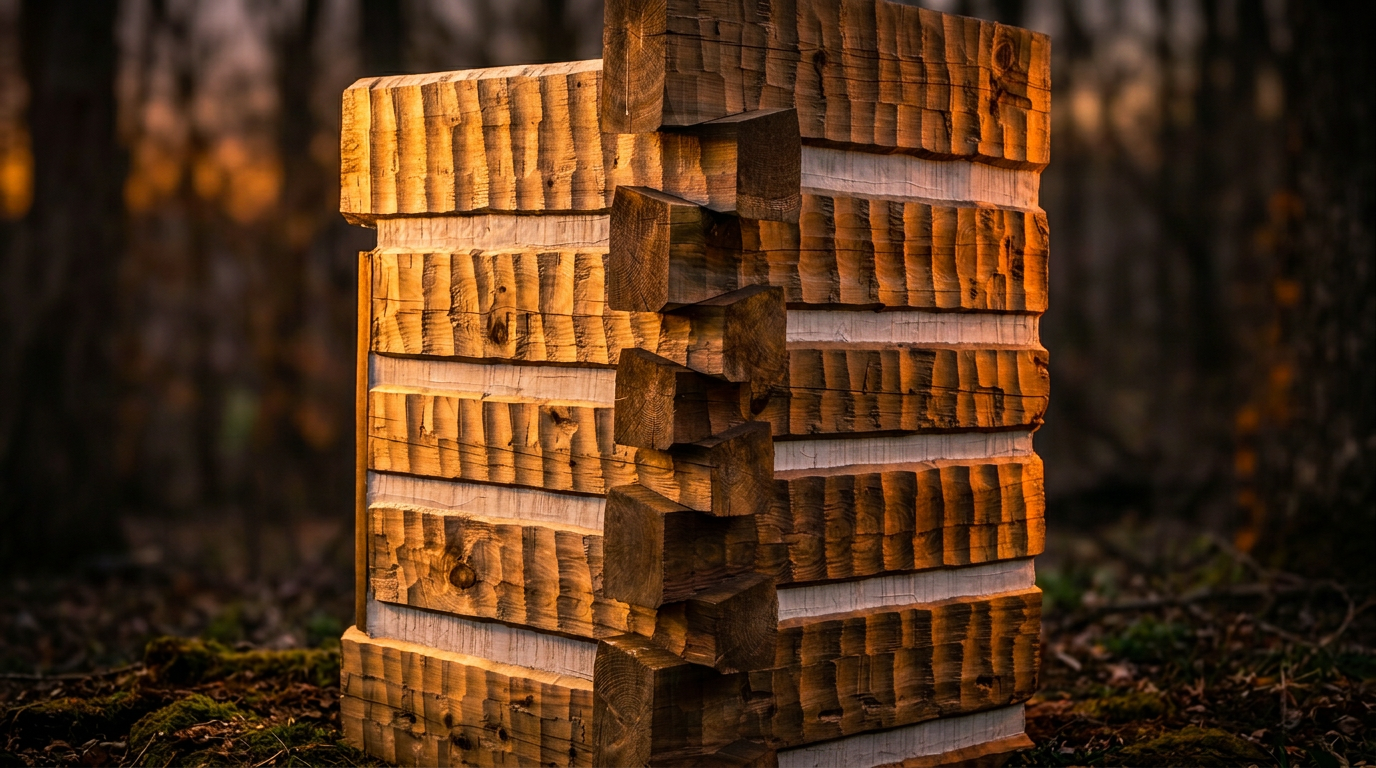
Stacked Traditional is the profile most people grew up drawing when they drew a cabin. Milled logs — flat top, flat bottom, curved or squared face — stacked course on course, tongue and groove tight, with a modern gasket sealing the seam.
This is the practical style. The logs are milled to a uniform profile so they land in courses of equal height, walls plane out flat, doors and windows sit in square rough openings, and the trades that follow us — electricians, HVAC, drywall — meet a house that behaves like a house.
It is also the tightest of the three. Tongue and groove between courses, foam gasket in the tongue, through-bolts drawing the wall down as the wood settles. The seam disappears. You read timber, not joint.
We build Stacked Traditional in white pine and Douglas fir most often — the two species that give you the widest possible wall at the price point that keeps the rest of the house honest.
The wall, in numbers.
Log profile
Milled D-log (round face) or square-log, 8 or 10 in. tall
Species
Eastern white pine, Douglas fir, or western red cedar
Corner
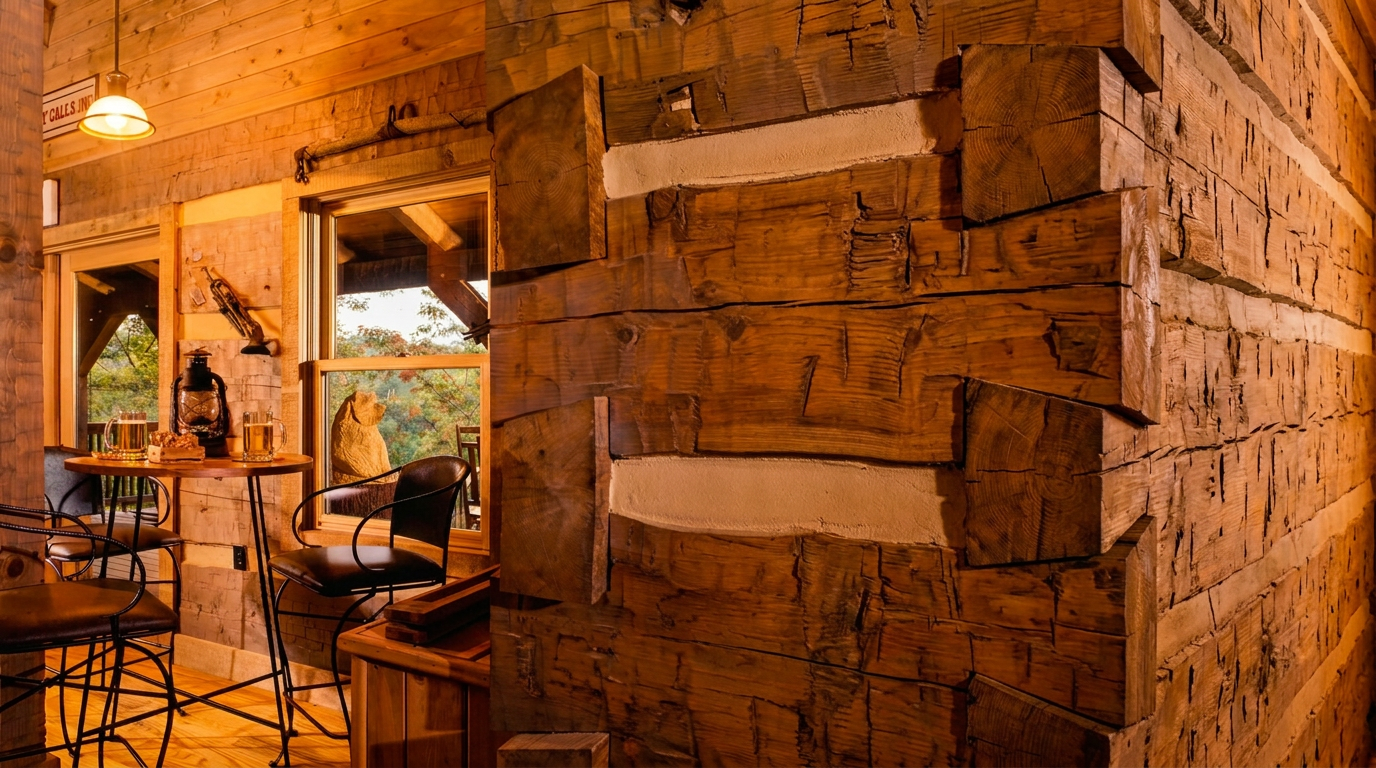
Butt-and-pass or saddle-notch, milled
Seam
Tongue and groove with foam gasket, through-bolted
Wall R-value
R-14 to R-17 at 8-10 in. profile
Best for
Family cabins, spec homes, additions, guest quarters
Four moves, in order.
01
Mill the profile
Logs are graded, then milled to a consistent tongue-and-groove profile on our Hundegger line — the same line we cut mass-timber panels on.
02
Cut openings in the shop
Rough openings for doors and windows are cut in Newport, not on the wall. The frame arrives ready for glass.
03
Stack with gasket
Each course rides a closed-cell foam gasket in the tongue. Through-bolts run vertically at intervals, tensioned to draw the wall as it settles.
04
Finish
Sand, stain, and seal. Interior surfaces read as timber; exterior surfaces weather to whatever tone the site asks for.
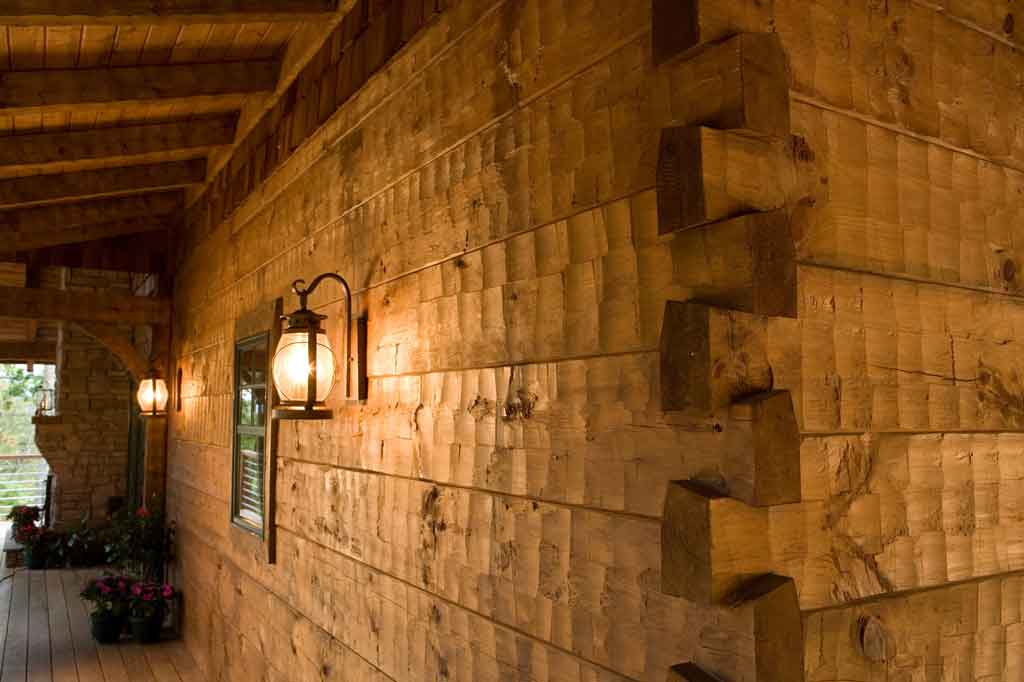
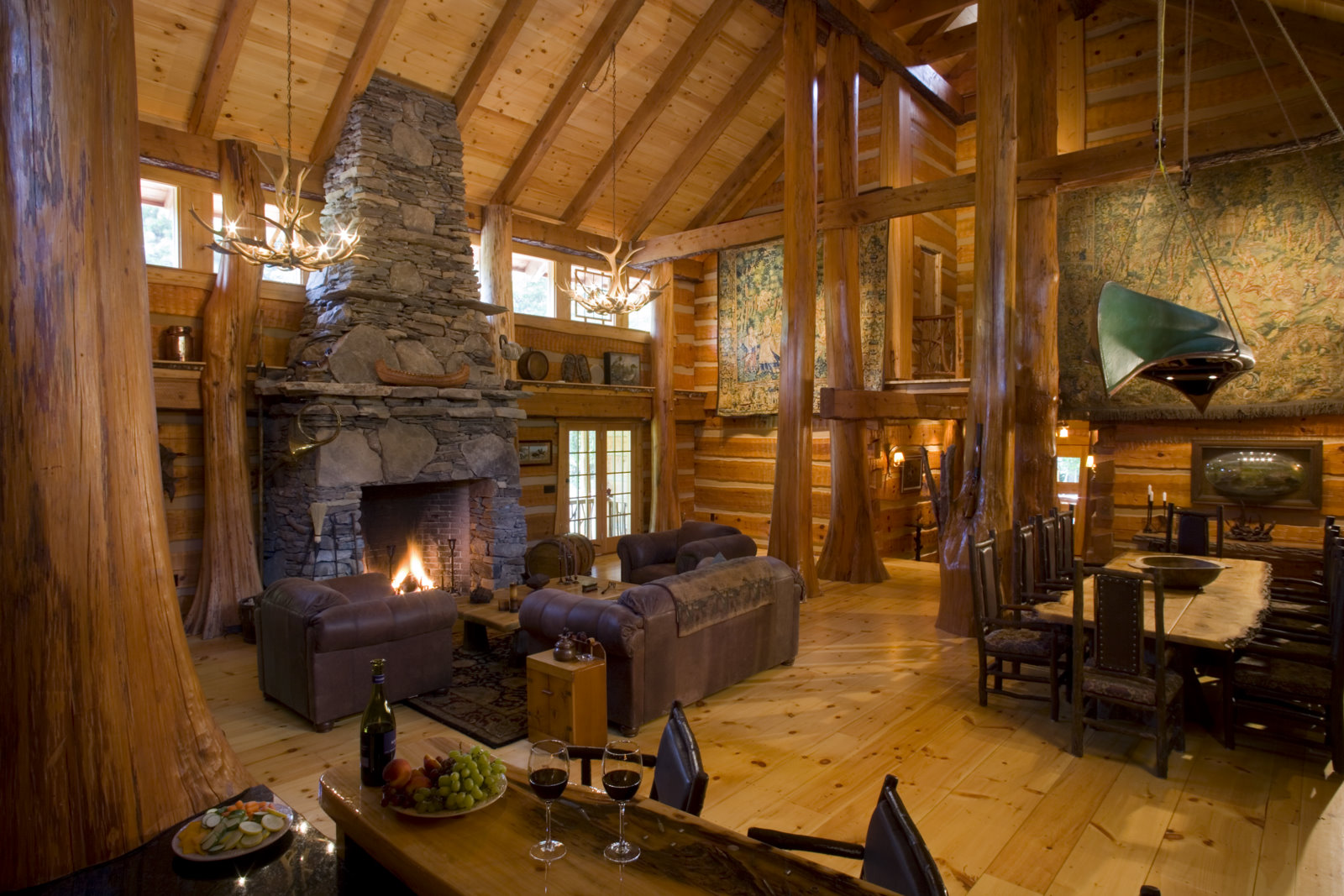
How it reads on the wall.
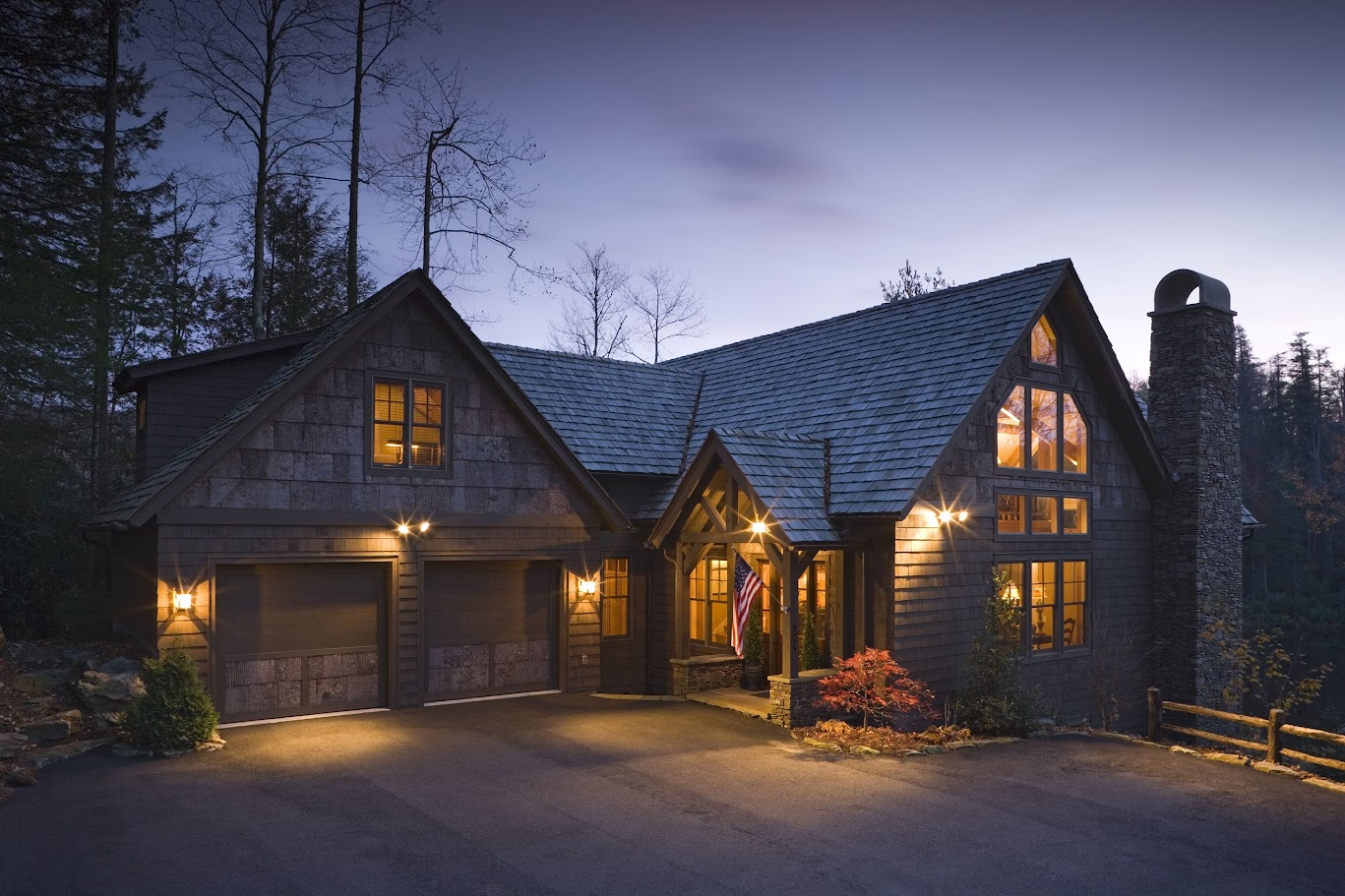
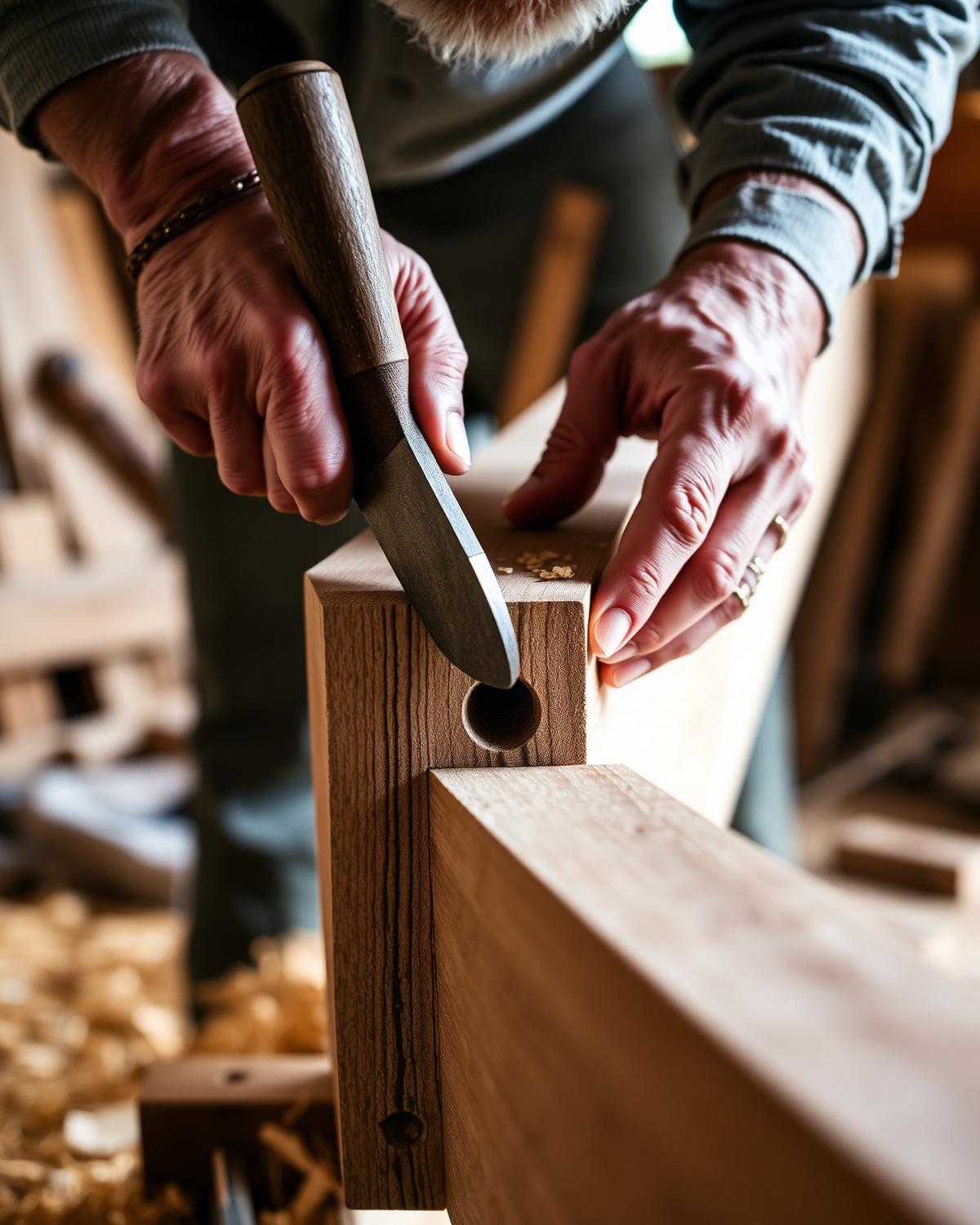
A working reference of finished walls, historical precedents, and shop details. We'll swap these for project photography as you send it.
Compare the silhouettes.
Every project begins with a conversation.
Tell us the site, the family, and the way you want the house to sound in the morning. We'll take it from there.